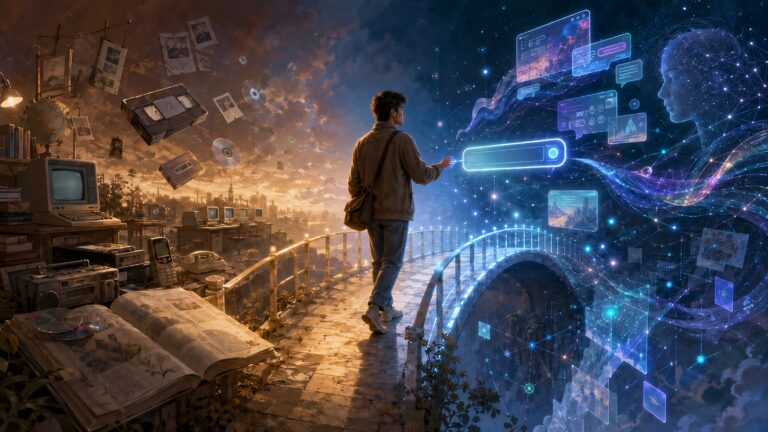
My journey into the expansive universe of virtual reality (VR) stems from a tumultuous, albeit enlightening, personal voyage. As a high school dropout, the traditional education system felt more like a maze with walls constantly closing in. My depression further intensified these struggles, making the idea of stepping out and contributing to society a distant dream. However, the serendipitous encounter with the world of online education in my late 20s to early 30s was a game-changer. It was like the doors to an unexplored realm swung open, shedding beams of hope on my dreary existence.
One of my therapists recommended audiobooks to help quell my fear of travel – a fear that significantly hindered my growth. I plunged into the depths of ‘Ready Player One’ by Ernest Cline, with the compelling narration by Wil Wheaton acting as a lifeline, slowly pulling me out of the abyss of my fears. The storyline, immersed in the boundless possibilities of VR, resonated with my longing for escape and learning. Being a gamer myself, the narrative struck a chord, especially the parts where the protagonist navigates through school in the virtual world. Despite not being a teenager anymore, the sense of adventure and exploration that the main character experiences in the digital schooling environment resonated with my own yearnings for a more engaging and flexible learning milieu. This intriguing blend of gaming and education showcased in ‘Ready Player One’ was a glimpse into a future where learning could be as engaging as a well-designed game, filled with quests for knowledge, characters representing different learning modules, and narratives that make the learning journey exciting and meaningful.
The VR Revolution in Education: Beyond Conventional Boundaries 🎓
Fast forward to the present, the immersive world of VR has blossomed into a promising frontier for educational training. Unlike traditional methods that often feel rigid and uninspiring, VR introduces learners to a dynamic and engaging environment where the boundaries between the real and the virtual blur, providing a fertile ground for exploration, interaction, and practical learning.
AR/VR: The New Horizon of EdTech 🕶️
Augmented Reality (AR) and VR are no longer just buzzwords but are gradually transforming the EdTech sector. These technologies provide interactive, engaging, and experiential learning experiences that cater to the diverse needs of learners. Whether it’s simulating complex physical phenomena or immersing students in historical timelines, AR/VR broadens the learning horizon exponentially.
The Dawn of Extended Reality (XR): Are We Close to a ‘Ready Player One’ Reality? 🎮
The concept of XR, which encompasses both VR and AR, paves the way for a more integrated, interactive, and immersive learning experience. The idea of living and learning in a digital yet tangible realm, as portrayed in ‘Ready Player One’, might still seem a bit far-fetched. However, the rapid advancements in technology are gradually bridging the gap between fiction and reality. The Metaverse, an interconnected virtual universe, is now a topic of robust discussion and development, bringing us closer to a reality where learning, working, and socializing in a digital dimension could become the norm.
The Hardware Hurdle: A Significant Roadblock to Mass Adoption 🖥️
One of the most pressing challenges in the widespread adoption of VR in education is the affordability and accessibility of the required hardware. High costs and the requisite technical know-how act as barriers for many aspiring learners. However, the silver lining is the relentless endeavor by tech giants and startups alike to develop more affordable and user-friendly VR hardware and platforms.
The Unyielding Promise of VR in Fostering Inclusive and Engaging Learning Environments 🌅
The journey from being entranced by the world of ‘Ready Player One’ to passionately advocating for the transformational power of VR in education has been exhilarating. The potential to create inclusive, engaging, and personalized learning experiences through VR is boundless. As the barriers of cost and accessibility lower, we inch closer to a reality where VR could revolutionize education, making learning a thrilling adventure rather than a dreaded chore.
The resonance of VR technology extends beyond just making learning enjoyable—it holds a promise of bridging societal gaps. For individuals like myself, and countless others facing accessibility challenges due to various physical or mental conditions, VR opens up avenues of exploration and interaction that might be difficult in a traditional setting. It’s a gateway to not just education, but a sense of community and belonging, a chance to interact, learn, and grow without the barriers that have held many back in the conventional system. The empathy embedded in VR technology, with its ability to cater to different needs, is a step toward creating a society where everyone has an opportunity to succeed, to contribute, and to feel valued. It’s about transcending the physical and societal barriers to create a learning ecosystem where everyone, regardless of their circumstances, has a seat at the table and the resources to thrive. This is not merely about academic achievement, but about fostering a sense of self-worth and community among learners, making education a collective journey of growth and discovery.