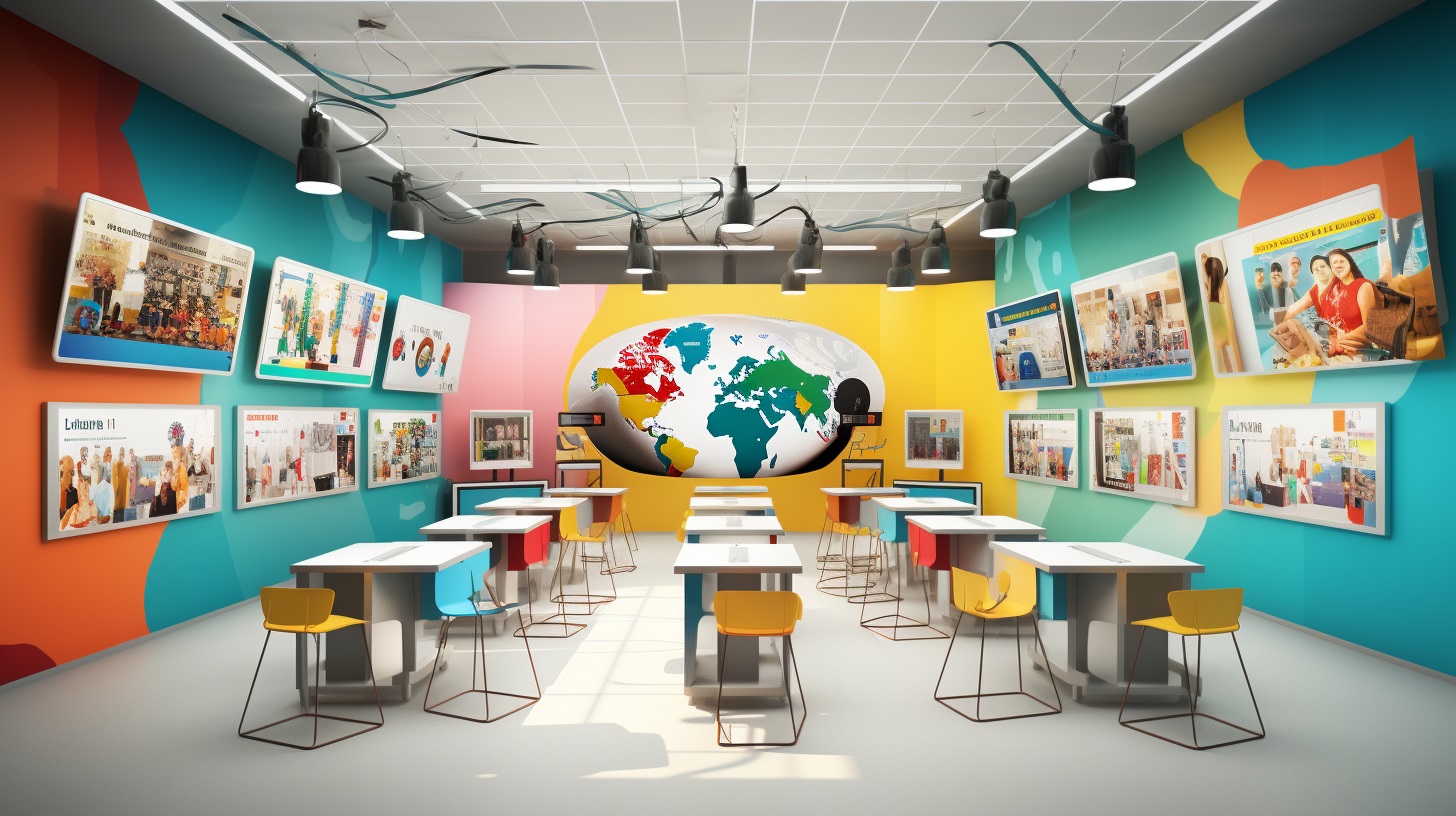
Remote learning has transformed the Learning and Development (L&D) sphere, ushering in a wave of innovation and adaptation. The transition from traditional classroom settings to digital platforms has brought its share of challenges but also opened up a host of opportunities.
Confronting Remote Learning Challenges 🚧
The shift to remote learning requires overcoming significant challenges, particularly the sense of isolation that can dampen learner engagement and motivation. The absence of in-person interaction requires innovative solutions to maintain a sense of community and collaborative learning. Additionally, disparities in access to technology—termed the digital divide—highlight the urgency for equitable L&D practices.
Another challenge is the potential disconnect between theory and practice in remote learning environments. Practical skills, often acquired through hands-on experiences, can be difficult to replicate online. This gap calls for creative instructional design that leverages technology to simulate real-world scenarios.
Seizing Remote Learning Opportunities ✨
Remote learning’s flexibility facilitates a learning environment where individuals can engage with materials at their own pace, creating a personalized learning journey. This self-directed approach aligns with Malcolm Knowles’ Adult Learning Theory or Andragogy, which emphasizes the importance of self-motivation and the application of learning to real-life tasks.
The scalability of remote learning allows for a broader reach, extending educational opportunities across the globe. This has led to an increase in cross-cultural collaboration and the sharing of diverse perspectives, enriching the learning experience.
Distributed Cognition and Remote Learning 🌐
The theory of distributed cognition provides a framework for understanding how knowledge can be spread across people, environments, and technologies. In remote learning, this translates into collaborative tools and platforms where knowledge is not confined to individual minds but is distributed across networks, allowing for collective problem-solving and innovation.
Technological Advances Enhancing Remote L&D 🔍
Advancements in educational technology have been pivotal. AI and ML offer adaptive learning experiences, tailoring content to meet individual needs. Virtual Reality (VR) and Augmented Reality (AR) technologies have become instrumental in simulating hands-on experiences, making complex concepts more tangible.
Impactful Examples of Remote Learning 📚
Examples of remote learning’s impact are abundant. For instance, virtual simulations in medical training have allowed students to perform procedures without the need for physical presence, enhancing their learning curve. Similarly, language learning apps utilize spaced repetition systems, a concept derived from cognitive psychology, to aid in memorization and language acquisition.
The impact of remote learning on L&D is multifaceted, presenting both hurdles and possibilities. It encourages a reconceptualization of how we deliver and engage with education. By embracing a distributed cognition approach and integrating technological advances, remote learning has the potential to not only replicate but also enhance and expand the reach and efficacy of L&D initiatives.