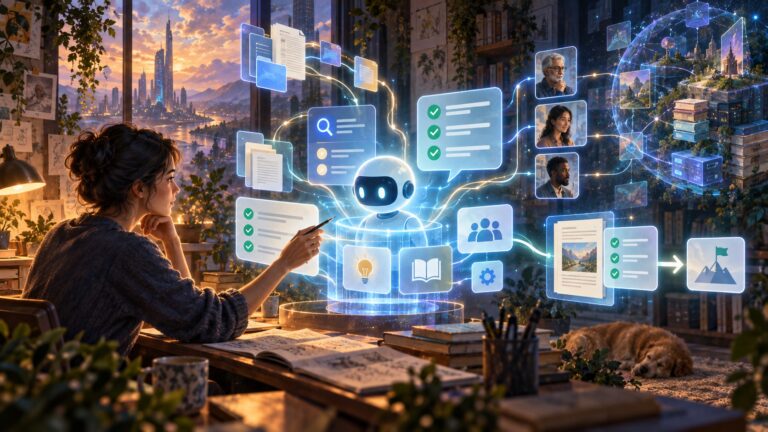
The 21st century has ushered in an era of unprecedented technological interconnection, radically and irreversibly transforming learning and educational processes. Within this new landscape, the concept of ubiquitous learning emerges, driven by the omnipresence of Information and Communication Technologies (ICT).
Breaking the Boundaries of Traditional Learning 🚀📖
Originally popularized by Burbules in 2006, ubiquitous learning posits that learning can occur anytime and anywhere. It’s not confined to the four walls of a classroom. This form of learning suggests that education is no longer bound by physical or temporal barriers, allowing for unrestricted and constant access to information and knowledge.
Challenges on the Horizon 🌐❌
However, with transformative opportunities come significant challenges. The “digital divide” – the inequality in access and use of ICT – remains a pressing concern. This divide can be material, where individuals lack access to the same technologies, or symbolic, where disparities exist in digital skills among individuals.
Connectivism: Navigating the Digital Age 🕸️🧠
George Siemens’ 2005 theory of connectivism offers a fresh perspective. Siemens argues that learning in the digital age is about constructing information networks and navigating through them. Thus, educators’ roles shift from mere knowledge dispensers to guides, teaching students how to learn and navigate in this new context.
Rethinking the Role of Educators 🍎🌱
In ubiquitous learning, educators must assume roles as guides and facilitators. They should accompany students through the process of building their information networks, teaching them to evaluate and select relevant information. This approach demands a radical shift in education, moving from a teacher-centered model to a student-centered one.
Collaborative Learning: The Cornerstone 🤝📘
Cristóbal Cobo emphasizes the need for collaborative learning in the context of ubiquitous learning. This approach allows students to learn from one another, collaboratively constructing knowledge. ICT offers tools to facilitate this type of learning, from social networks to online platforms, enabling students to share ideas, debate concepts, and work on projects, irrespective of their physical location.
Ubiquitous learning offers a transformative shift in education, providing a vision of more flexible, personalized, and student-centered learning. However, it’s essential to address the challenges this approach presents, especially concerning equity and learning quality. Through the insights of Burbules, Cobo, and Siemens, we begin to see how ubiquitous learning is redefining education and how we can adapt and thrive in this ever-changing landscape.